On November 9th 2016, just one day following the presidential election of Donald Trump I remember finding one silver lining in what a majority of my friends and family found devasting. Admittedly, I also felt a sense of devastation, along with a rush of anxiety and confusion, however I couldn’t help but to remember something I had heard months prior that gave me hope. Is it possibly that something could reconcile the chaos that was sure to follow? In August 2016 author Marc Lamont Hill appeared on the Breakfast Club radio show to promote his new book Nobody: Casualties of America’s War on the Vulnerable, from Ferguson to Flint and Beyond. It was what Hill said here that sparked my optimism for the Democratic party’s response to their days old defeat.

Hill is currently a Professor at Temple University however, he is also widely known for his TV commentary, political activism and for opening Uncle Bobbies, a complementary book store and coffee shop in his home town Philadelphia. Most recently Hill appeared in headlines for what some interrupted as a controversial statement regarding Israel in a 2018 speech to the United Nations. Despite his speech lasting more than 20 minutes, critics chose to emphasis his closing remarks where he calls for political, grassroot, local and international action that “would give us what justice requires, and that is a free Palestine from the river to the sea.” For staunch supporters of Israel, “from the river to the sea”, is an antisemitic comment. Many critics however ignored the fact that Hill provides detailed explanation in his speech of human rights abuses committed by the Israeli government on Palestinians, along with the fact that “from the river to the sea” is a phrase used by both supports and detractors of Israel (In later interviews hill emphasizes that his criticism of Israel is directed at the political power of Israel as a state and not at the religious and ethnic communities of Israel’s Jewish people).
Hill’s appearance on the Breakfast Club came just one month after the 2016 Democratic National Convention. This was a historic moment for the Democratic party. By nominating Hillary Clinton they ushered in the first female presidential nominee from either major political party. Clinton was ahead in the polls, leading Trump by a nearly seven points, and major swing states like Pennsylvania, Wisconsin and Michigan were leaning blue; little did we know supporters of xenophobic conmen are hesitant to admit their support of such candidates to inquiring pollsters.
Hill, with the hosts of the Breakfast Club – Charlemagne da God, Angela Yee and DJ Envy, began discussion the recent political conventions and his thoughts on the upcoming election. After several minutes, Hill said, rather bluntly, he wouldn’t vote for Clinton, instead he planned to cast his vote for Green Party candidate Jill Stein. This came as a surprise to the Breakfast Club hosts who, like most American voters can’t fathom the idea of voting outside of our intimidating two-party system. But for Hill, the Democratic and Republican parties are two sides of the same coin. Both perpetuate a brand of politics whose true loyalty isn’t to its voting constituencies but rather lies with its political donors. Albeit they differ on a number of social issues, they both operate comfortably inside a corporatist, white supremacist and patriarchal system. “I want a radical choice, because we need a radical change in this country” he says. “Instead of saying the system is broken let’s fix it, we should be saying the system is working, let’s break it”.
In order to break the system Hill says, (speaking mostly to Democratic politics) you must get out of the status quo of electing neoliberal candidates who simply grandstand on progressive ideas. A Trump general election victory wasn’t something Hill hoped for however, he envisioned a possible Trump victory as an opportunity to inspire liberal voters to demand a new brand of progressive politics from the Democratic Party. Hillary and Trump didn’t offer a substantial difference for voters to choose from, according to Hill, because they both operated inside the same corporatist political system. “I would rather have Trump be president for four years and build a real left-wing movement that gets us what we deserve as a people, than to let Hillary be president and we stay locked in the same space and we don’t get what we want” he says.
This was the optimism that stymied my despair following the 2016 election. Hill’s assertion that Trump’s presidency had the opportunity to allow Democrats to hold a certain leverage over Democratic party inspired me that a progressive change was possible. I anticipated a popular left-wing movement being spawned as a response to the Democrat’s failures. Hill’s assertion focused mainly on building a movement outside the Democratic party that would mount an offensive and influence the party’s platform from a bull horn instead of a seat at the table. I was slightly more naïve and optimistic that this could be achieved from inside the party.
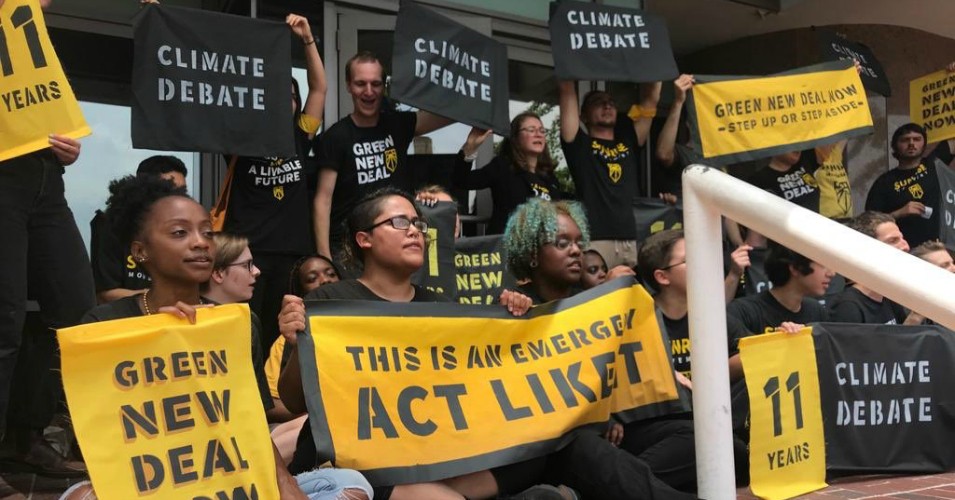
Sanders had won 22 states (and came within a one or two percentage points of winning half a dozen others) just a few months prior in the Democratic primary election, surely voters and the Democratic party would capture this momentum and energy into harnessing a progressive platform that would bring this new political base into the mainstream. Could a Trump presidency shake the Democratic establishment into reshaping liberal politics? Would voters, old and new, come together to end foreign wars, increase the minimum wage, establish a green new deal and demand Medicare-for-All, thereby building a 21st century New Deal coalition? Would the Democratic establishment feel that a they must evolve in order to deny Trump a 2nd term? What we have come to see in recently weeks is that my optimism was just that. It was sense of wishful thinking and hopefulness with no real assurances.
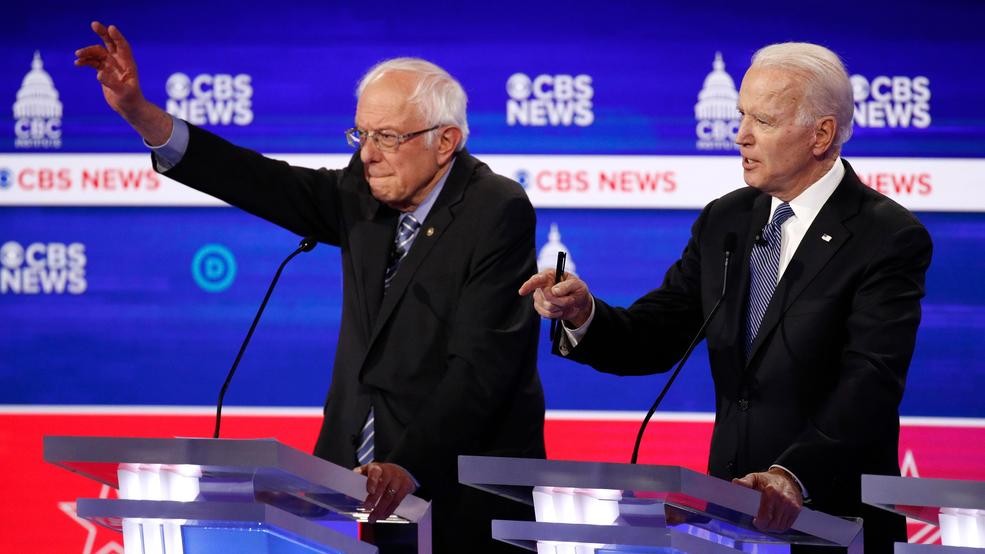
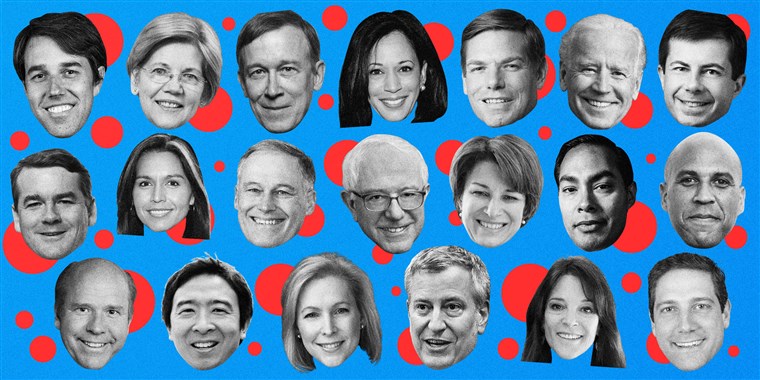
Joe Biden is the presumptive nominee. Sanders’ momentum entering this year’s presidential primary was stopped in its tracks with unbelievable precision following South Carolina’s primary. Whether the voters would’ve supported Biden without the entire Democratic party field’s endorsements, we will never know. In the proceeding primaries, with Biden’s sudden South Carolina victory and major party support behind him, voters chose the establishment instead of the revolution. In their attempt to remodel the country after a Trump presidency, Democratic voters have made it clear that they are choosing to build with what is familiar and un-disruptive. For these voters the shock of narcissism, hatred, ignorance and sheer ineptitude seen from the Trump administration was the driving force to vote for the return to normalcy. This isn’t the time to bet on a form of progressivism that’s been absent from American politics since the Roosevelt administration. Biden exemplifies a comfortability they concede has been successful at winning past elections
Willie Legette, professor emeritus from South Carolina State University and Lead Organizer for Medicare for All-South Carolina, spoke on the power of this comfortability in a recent interview with Jacobin. Speaking on exit poll questions given to South Carolina Democratic primary voters Professor Legette’s said “Of these three indicators here – healthcare, economic inequality and the voters’ view of the economic system – it would suggest that these voters probably would have voted for, if they followed their preferences and a candidate that is more in line with their preferences, would probably have voted for Sanders.” Professor Legette is referencing exit poll questions that asks voters which issue’s matter most to their vote, and their opinion on the performance of the United States’ economic system. What professor Legette is suggesting is that it might be in these voters’ material interests, and their subconscious preference to support Sanders, but they ultimately went in a different direction.
The exit polls of Democratic primaries following South Carolina suggests similar conclusions. On average, in Michigan, Texas and Illinois, three diverse states vital to any candidate’s nomination, 60% of voters said they support a government run health care plan for all. However, in each of these states Biden received the most support from voters who claimed healthcare was their number one issue when choosing a candidate. This would suggest that voters weren’t following their immediate preference.
Additionally, Biden received a majority of the support from voters who said either race relations or climate change were the issues that matter most to their vote (similar to South Carolina, Biden also received the most support from voters in Illinois who said economic inequality was their main issue). Since Sander’s past record and campaign platform indicates that he supports these issues with much greater fervor, we can suggest voters again weren’t following their natural preference. Exit polls also asks voters if the Democrats should nominate someone who “agrees with you on the issues” or “can beat Trump”. On average 59% of voters thought nominating someone who could defeat Trump was more important than nominating a candidate whom they are in agreement with.
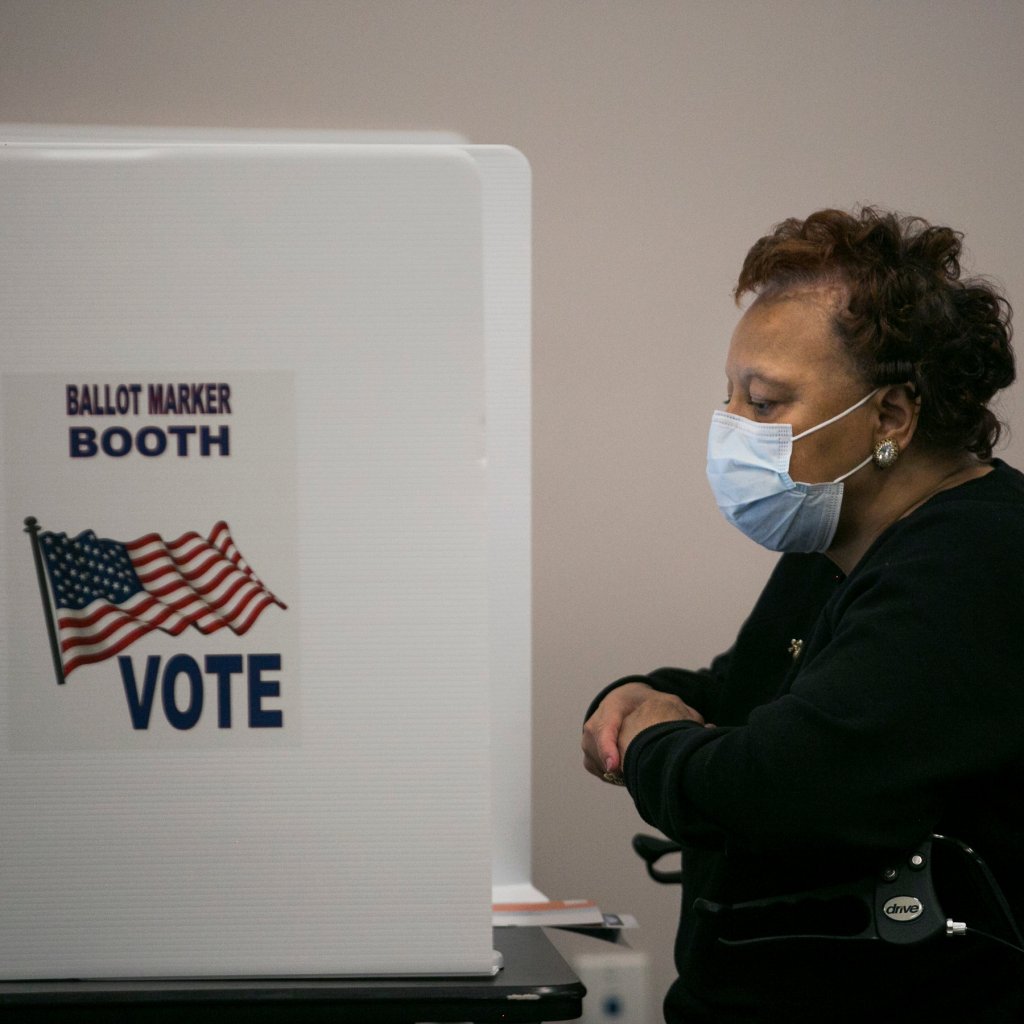
Democratic voters have made themselves clear, so much so that Sanders has conceded his campaign as not to appear in defiance of a Biden victory over Trump. For the time being a return to neoliberal normalcy is all that the Democratic party wishes for. Although it seems there will be no dismantling of our political corporatists system in this presidential contest, Marc Lamont Hill’s desire for a radical shift in American politics hasn’t been completely unsuccessful. Alexandria Ocasio-Cortez, Ilhan Omar and Rashida Tlaib all joined Congress in 2018 and quickly got to work proposing progressive policies from the Green New Deal to the Homes for All Act. Local cities and states’ have seen a surge in progressive candidacies and victories, many of whom are challenging long time moderate incumbents. Although a combination, this wave of progressive energy seems to stem more from the confidence Sanders’ 2016 election produced than from a disdain for Trump.
Four years is a very short period of time in human existence, not to mention for breaking a well-oiled machine, as is American politics. Although Trump’s first term as presidency may not have produced the revolutionary transformation Hill and I hoped for, the seeds have begun to grow. Every candidate in this year’s presidential primary was forced to address issues of Medicare For-All, eliminating the use of fossil fuels and labor rights. The “system” Hill spoke of breaking is still firmly operating, but as each day passes screws are loosened. A younger generation grows every day, galvanized by a financial crisis, $1.5 trillion of student loan debt, the wars in Iraq and Afghanistan, stagnant wages and catastrophic environmental dangers stands firmly behind the progressive movement. “We can afford to lose an election” says Hill, “but we can’t afford to lose are values”. Unfortunately, a Joe Biden nomination means sacrificing these values once again.












 HOLD -UP