Democratic debate number two – what to expect, if anything worth wild at all

The second of twelve DNC scheduled debates is set to convene this week between twenty Democratic presidential hopefuls. The candidates have been divided into two ‘teams’ of ten and will take the stage in Detroit on Tuesday and Wednesday night to eloquently debate the moral and crucial concerns of our time. These dignified US politicians will certainly refrain from speaking out of turn, deliberately ignoring the moderator’s questions and aimlessly attacking one another to score a prime-time CNN soundbite.

            Unfortunately, this is exactly what these debates will most likely consist of. Each debate is scheduled for two hours, excluding commercial breaks and moderator questions, that gives each candidate twelve minutes of speaking time. Obviously this isn’t the case, but it points to the ridiculousness of trying to squeeze debates into cable television’s allotted prime time viewership. These types of structured debates don’t offer candidates the opportunity to sufficiently detail their policy platforms. Only two candidates (Harris and Biden) in the June debates surpassed the twelve-minute mark. Their purpose is to introduce the candidates to a wide audience and hopefully reach voters whose daily schedule doesn’t include the latest campaign updates.

Why the DNC doesn’t shrink the size of each cluster of candidates to allow for an actually intelligent debate is unbeknownst to me. Is it because they believe the American audience is too uninterested and lazy to sit down for a couple extra nights? Do the candidates themselves not wish to have to intelligently walk us through their policy decisions? While the debates may not perfectly detail each candidate’s policy platforms, there are some things I expect to see.

The first night of debates consists of Senators Bernie Sanders and Elizabeth Warren, the two far-left leaning progressive candidates. While these two senators share many of the same policy decisions, and have refrained from attacking each other thus far due to their friendship, I doubt we’ll get any steamy rows between the two of them. Instead, I expect Mayor Pete Buttigieg and former Congressman Beto O’Rourke to poke jabs at the either Sanders or Warren, whom they both trail in the polls. O’Rourke’s campaign already seems to be slipping away from him and he needs to find a way to bring it back to life. Buttigieg on the other hand, can use this opportunity to convince centrist Democrats that he’s possibly a safer choice than Biden to quell their fears of a Sanders/Warren White House.

The second night has the makings for a much more exciting performance. Senator Kamala Harris has been paired next to former Vice President Joe Biden. It was only a month ago when the two sparred over issues of school busing, and Biden’s blundering past involvement with segregationist senators. In the last week leading up to this debate Senator Harris has released her plans for eliminating student debt, implementing affordable health care and tackling climate change. Look for Biden to certainly mention these policy developments.

What I’m most excited for however is my expectation for Andrew Yang to receive a bump in his speaking time. If the spatial arrangement of candidates tells us anything, it’s that being in the middle matters. Yang, who received the least amount of speaking time in the first round of debates, – partly due to his microphone being deliberately turned off unless specifically called on – has been positioned directly right of center, prime debate real estate one could say. I assume this gestures that the moderators are planning to make Yang a much more integral part of this debate. I’m not watching to learn to each candidate’s ten-point plan on how they’re going to save the United States. I’m watching to simply because it’s entertainment. These debates are sure to offer great political theater and I will have my popcorn ready.
The DNC says no to a climate change debate

On June 26th and 27th Miami was home to the first of twelve scheduled Democratic presidential debates between this campaign’s record setting number of Democratic candidates. Twenty presidential hopefuls, ranging from party outsiders like Andrew Yang to former Vice President Joe Biden, took the stage in what was an unprecedented two night event. These candidates did their best to remember the talking points their campaign staffs tirelessly drilled into their minds, and gave a pitch to the American people why they should be this country’s next president. 

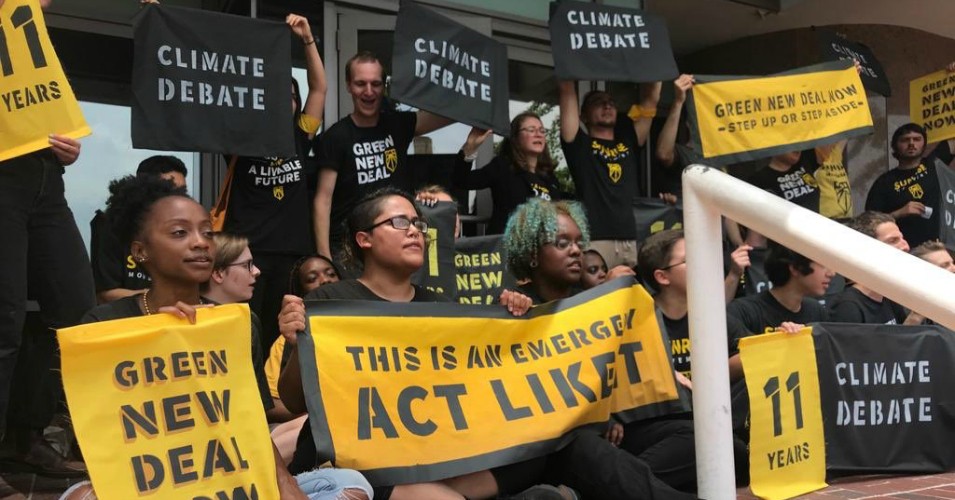
While moderators Chuck Todd, Lester Holt and Rachel Maddow (and others) offered their best attempts at babysitting the candidates, they failed to address the protest that was simultaneously happening at the Democratic National Committee (DNC) headquarters in Washington D.C. For three days, members of the Sunrise Movement – an activist group composed of mostly high school and college students focused on tackling issues related to Climate Change and the environment – protested in front of the DNC headquarters to express their dissatisfaction with the DNC’s refusal to hold a debate on Climate Change.

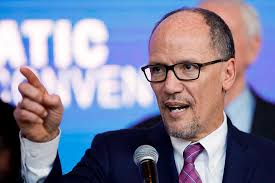
While more than a hundred activists attended the protest, many took it one step further by throwing down sleeping bags and spending the night on the steps of the DNC. A couple weeks prior to debates DNC Chairman Tom Perez released a statement indicating that the DNC would not adhere to the requests of any interest group organization for specific issue related debates, most notably, climate change.

According to Perez, hosting a debate on climate change would be unfair to other interests groups who have requested debates, as well to the candidates themselves. Jay Inslee, the Governor of Washington and candidate for the Democratic nomination, has dedicated his whole campaign (with a few exceptions) to addressing the threat of climate change. The DNC and Perez believe that by agreeing to a debate on climate change they would be tipping the scale in favor of Inslee, something they desperately don’t won’t to be accused of following the 2016 Wikileaks scandal in which they were allegedly caught favoring then candidate Hillary Clinton.

But surely you would think the candidates don’t need the assistance of the DNC to debate issues related to climate change. This would be true, and it’s something the DNC was mindful of. The DNC has issued a warning to all candidates that participation in any unsanctioned DNC debate would result in that candidate’s exclusion from the now eleven future DNC scheduled debates. This type of first-class black mail isn’t new for the DNC. In 2016 they similarly threaten to punish candidates who ventured to unsanctioned DNC debates. Likewise, during the 2016 election the DNC refused to hold a debate on issues related to criminal justice reform and civil rights requested by Black Lives Matter.

Climate change was given less then 20 minutes between the combined debates this past month. Twenty minutes to discuss sea level rises, human displacement, excessive droughts, wild fires and many more vital threats that are accompanied with climate change. It’s safe to say that 20 minutes allotted between 20 candidates is nowhere near enough. Perez is wrong in his understanding of climate change as a singularly issue. The conversation revolved around climate change incorporates important issues of the economy, unemployment, energy use, and national security; it is in many ways the most important issue our next president will have to tackle.

The Sunrise Movement’s efforts to publicly shame the DNC may thankfully be paying off. The DNC reportedly may be willing to vote on resolutions to change its rules to allow for   issue specific debates during its meeting held in August. The Sunrise Movement efforts during the June debates brought noise to the doorsteps of the DNC, hopefully they have begun to listen.