Recently I came across an article that immediately caught my attention. “The 100 best TV shows of the 21st century”. Being an avid procrastinator, I fill much of my time by binging TV shows thanks to our many readily available streaming services. You name it, I’ve seen it – The Office, Breaking Bad, The Wire, Game of Thrones and of course, the one that changed television in all the best ways, The Sopranos (Which I’m happy to see The Guardian hit the nail on the head by awarding Tony and his crew the number one spot).
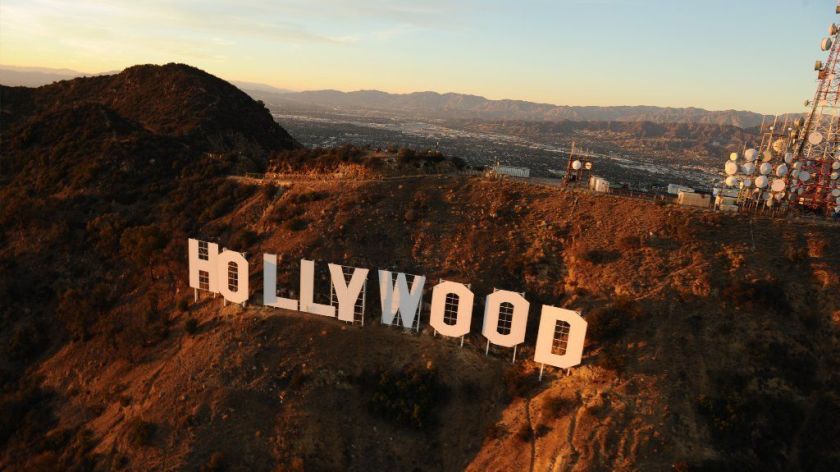
This list left me curious on another method I indulge in frequently to procrastinate, movies. What are the top 100 movies of all time (as if a list of that sort is even achievable)? After a swift Google search I found lists by The Hollywood Reporter, IMDb, The American Film Institute (AFI) and Empire. I’ll save you the time if your curiosity is killing you. The Godfather received the crown from three out of four lists. The AFI was more partial to Orson Welles’ 1941 film Citizen Kane.
There is no accurate way to produce a list of such a subjective topic. While AFI proclaimed Citizen Kane the best movie of all time, Empire believed it deserved a more mediocre placement at number 46. Quinten Tarantino’s first film Reservoir Dogs made the cut for two lists but was booted from the other two. It’s an impossible task to bundle down 100 years of cinematic brilliance into a what feels like a surprisingly short list. However, while I jumped from one list to the next, I did develop one similar complaint. Not one movie on any of these lists starred a Black person as the sole lead role.
The issues of racial equality in Hollywood are well-documented. It was of course brought to light during the 2015 and 2016 Oscars when not a single person of color was nominated for best/supporting actor/actress award, resulting in many Black members of Hollywood boycotting the event. To be fair, there are a handful of movies on these lists that star a Black person as a second leading role such as Rocky or Star Wars. Others give opportunity for Black actors to share the big screen’s leading role with a white counterpart, such as Pulp Fiction, Shawshank Redemption and Blazing Saddles.
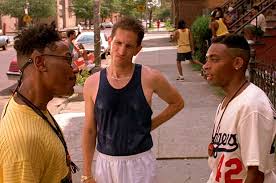
My critique of these lists was sparked by its absence of Do the Right Thing, Spike Lee’s 1989 masterpiece, a movie that was fresh in my mind from watching it a few days prior. How does arguably the best movie, by one of the best film makers of the last 40 years, not make the cut? This then got me thinking, what other movies starring a Black person as the leading role were missing from this list. American Gangster, Training Day, 12 Years a Slave, Moonlight, Boyz N the Hood, all were left off, but each one can muster a strong argument for deserving to be on these lists. As my mind did somersaults trying to find one reason to justify these exemptions, I kept returning to two explanations.
First, Hollywood’s decision makers have a prejudice against trusting black and brown actors to carry a movie as the sole leading man. Why couldn’t Wesley Snipes play John McClain in Die Hard, or Morgan Freedman take on the role of Chief Brody in Jaws (freedman would make a convincing in over his head police chief if you ask me). This absurdity is best exemplified by the backlash Idris Elba received in 2015 for simply having his name mentioned as a possibility to replace Daniel Craig in the 007 franchise.
In addition, Hollywood powers that be have a prejudice against promoting films that narrate the stories of Black and Brown Americans. In other words, stories that don’t fall accustom to the white main stream way of life. Boyz N the Hood is one of the most culturally impactful movies of the last 30 years. It sparked the careers of some amazing actors and actresses not to mention the career of John Singleton, the movie’s creator. In an article written in the New York Times shortly after Singleton’s death, writer Touré makes a compelling point. Boyz N the Hood is no less a realistic coming of age story than Risky Business or The Breakfast Club; The Breakfast Club, which is considered a top 100 movie on one of the lists I must add. It depicts a part of American society that may be absent of many people’s daily consciousness. However, its cultural impact hasn’t gone completely unnoticed. In 2002 the Library of Congress decided it deserved to be preserved in the National Film Registry. What does the Library of Congress know that these Hollywood industry writers and publishers don’t?
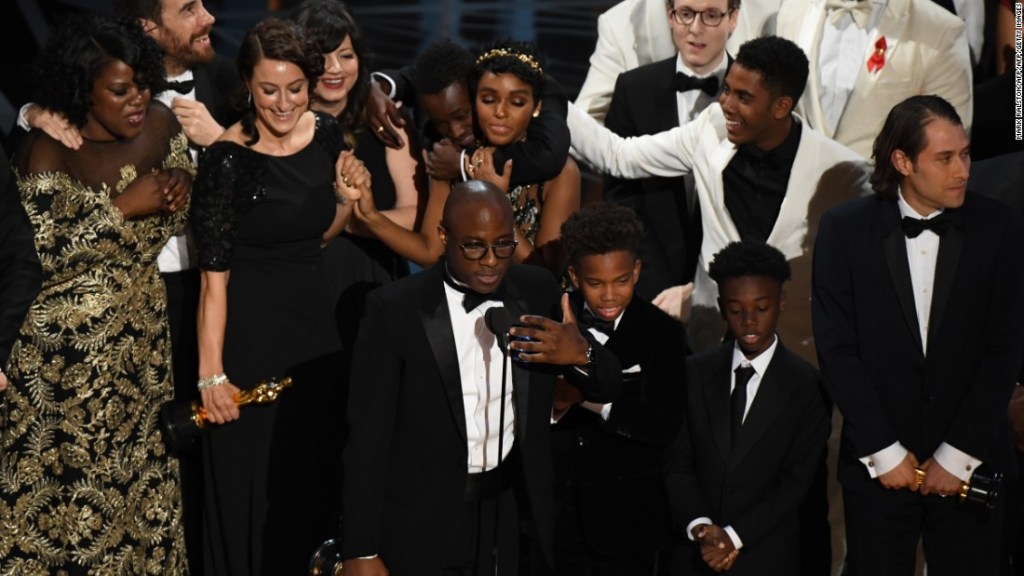
If you’re looking for a more recent example I point to Moonlight. Unlike Boyz N the Hood, Moonlight was awarded the academy award for best picture. It’s also a coming of age story, but depicted with a softer tone and more nuance cinematic style. But despite its more art house impression, the authors of the lists still didn’t consider it a top 100 movie.
I feel obligated to mention that the criticism thus far has only revolved around the lack of Black male actors. It’s important also to point out that while many movies I mentioned earlier costar a Black actor, none costar a Black actress aside from Zoe Saldana in Avatar; a movie where she’s digitally animated for half of her screen time. This problem of an over saturation of whiteness in Hollywood extends to exclude not just Black and Brown woman, but Asian, Latinx and all other actors and actresses of color.
It’s important to diversify the stories we as a society consume. The only way to grow is to expand our consciousness, and viewing films that tell stories that don’t cross our paths on a daily basis is a great way to do just that. Movies are also made to spark emotion in a viewer, I would argue that in many ways consuming a story that you may not experience regularly evokes excitement and curiosity that a movie viewer craves. Despite my criticism of Hollywood thus far I’m optimistic about its potential of inclusivity. Unfortunately however, like much of American society, it seems to be happening by kicking doors down instead of them being politely let open. Michael B. Jordan, possibly one of the biggest names in Hollywood right now, founded Outlier Society, a production company dedicated to creating films and other projects with a focus on culturally diverse stories and film staffs. Outlier Society’s first project is set to be released on December 25th 2019. It tells the true story of Bryan Stevenson (Michael B Jordan), as he establishes the Equal Justice Initiative and works to appeal the murder conviction of Walter McMillian (Jamie Fox) who’s on death row. I’m extremely excited for this film and to see the future works that come from Jordan and the rest of Hollywood’s new talented diverse generation.
 HOLD -UP