In the beautifully renovated Met theater, a crowd of family, friends, campaign workers and an assortment of Philadelphia political leaders watched eagerly Monday morning as a cohort of city officials took their oath of office. The inauguration was heterogenous to say the least. The ceremony included the swearing in of City Commissioners, a new Sheriff, Register of Wills and Municipal and Court of Common Pleas judges. Albeit unfair, the attention of the audience was monopolized by the inauguration of City Council members and incumbent Mayor Jim Kenney.
City Council was welcoming (some more than others) four new faces, all of whom are younger and pledge to bring a wave of progressive policies; whether they deliver on these promises we must wait and see. Once sworn in and their family members brushed off stage, the newly inaugurated Council proceeded to formally appoint a Council President. With no public debate or deliberation, council members appointed Councilman Darrell Clarke to a continuous term as Council President. Additionally, despite Mayor Kenney’s unsurprising campaign victory, audience members were eager to hear what he has in store for his final term.
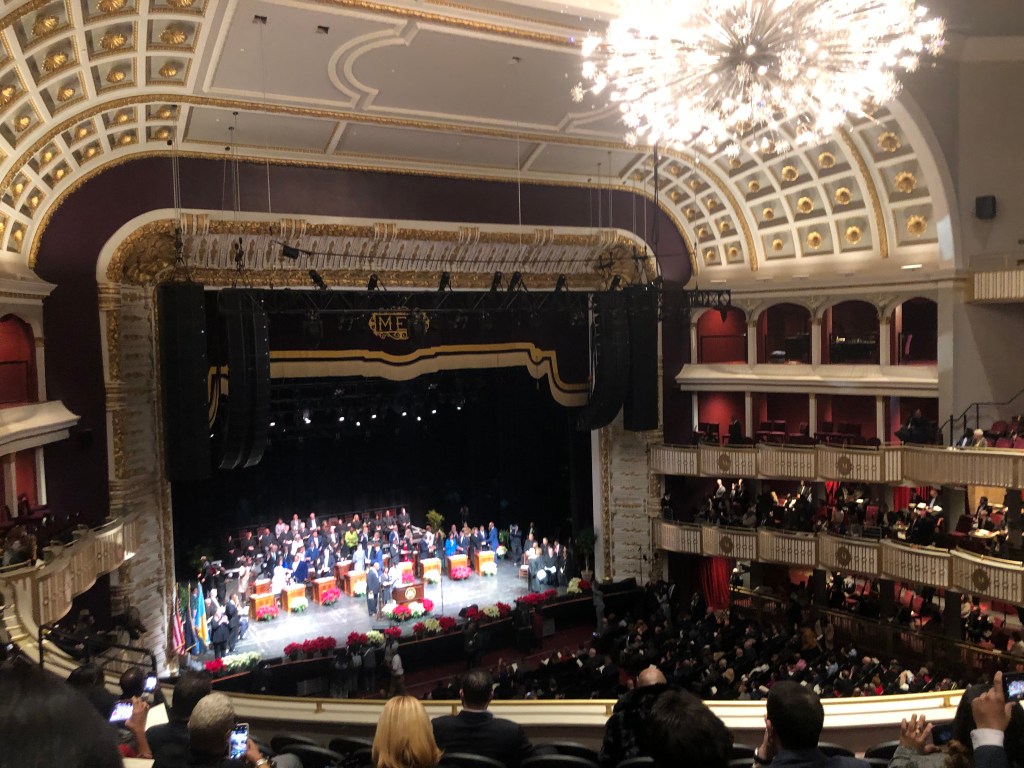
Mayor Kenney spoke on achievements of his administration’s first term and illustrated a five-point plan for what he hopes to address going forward. He touted the development of his city-wide pre-k program and gaining local control of the Philadelphia School District. Although he failed to elaborate on the details, he spoke about meeting “ambitious climate goals” and pledged to work with the state legislature to increase school funding.
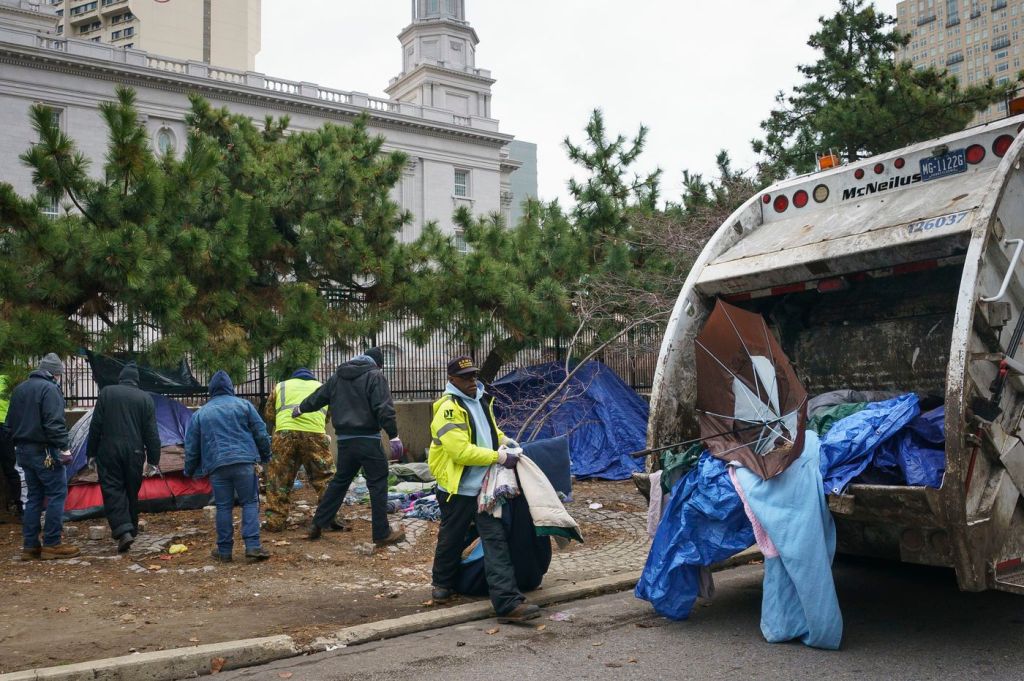
However, while he addressed many other important topics, Mayor Kenney failed to address the forced removal taking place throughout the city. While the Philadelphia Boys Choir sang The Star-Spangled Banner and clergy leaders addressed the audience with prayers and readings, Mayor Kenney’s Department of Parks and Recreation was forcibly removing homeless citizens from multiple encampments along or near the Vine Street Expressway. The encampments were located on what is considered park land. According to reporting by the Inquirer three sites were targeted, leading to approximately 30 people displaced, despite some legal discrepancies on if the city can legally remove people from public park land.
Residents of the camps were given prior notice about the displacement, but some choose to stay, and on Monday morning they watched as employees from the Department of Parks and Recreation, armed with trash trucks, trampled through what little dignity they still preserved. In Mayor Kenney’s defense, beds were made available for every resident being displaced in one of the city’s homeless shelters and some residents took the opportunity to move inside.
Homelessness is one of the most vital issues facing any community. Despite Philadelphia’s massive poverty rate – the highest in the nation out of the ten largest cities – it has a comparable low unsheltered homeless population. As of 2018 approximately 1,000 residents were living on the street. This is due to Philadelphia’s committed outreach efforts spurred by Project HOME, a nonprofit organization dedicated to providing full circle homeless services. The city is also partnered with 25 shelter programs, all of which operate 24 hours a day. Comparably, homeless shelters in most other large cities only provide services from sundown to sunrise, making it much more difficult to transition people out of homelessness permanently.
It is unclear whether Mayor Kenney gave a direct order for this mass removal, however the Department of Parks and Recreation is a city agency under the Mayor’s office directive. Presumably, something of this magnitude, with multiple department coordination, must be subject to Mayor Kenney’s approval. I do it thinks vital that our city works together to ensure our homeless citizens have a safe place to live, especially during the winter. Yet, this does not seem like the reason for this displacement. I would ask Mayor Kenney if the goal of the displacement was to ensure the residents of these encampments were moved indoors, why send a team of Parks and Recreation employees with shovels and trash trucks? Rather, wouldn’t it be more productive to assist these residents with social workers from the Office of Homeless Services? In at least one of the camps, half of the residents had vacated because of the city’s posted notices of the eviction. Were efforts made prior to Monday’s removal of finding safe shelter for these people, or was the goal simply to have them move to a less frequented section of the city?
To clarify, I do appreciate the city’s efforts in partnering with community organizations to serve Philadelphia’s homeless population. Nevertheless, it does rub me the wrong way that while Mayor Kenney was being sworn into office, his administration was forcibly removing homeless people from multiple camps throughout the city. Mayor Kenney spoke on his agenda for homeless people one time in his inaugural address. He said “We’ll continue our historic investments in housing affordability, homeless services, and homeownership. This will help stabilize Philadelphians struggling amid poverty and grow our middle class.” Better than Council President Clarke’s complete lack of acknowledgement in his inauguration day address. Poverty has been and still is a major issue facing Philadelphia. Both Councilman Clarke and Mayor Kenney pledged to lift 100,000 people out of poverty by the end of their terms, a bold goal that would reduce the poverty rate by 25%. I hope they will both collaborate in their upcoming terms on ways to ensure our homeless population isn’t forgotten in this ambitious fight, so that when the next mayor is taking their oath of office, he or she won’t also be evicting some of our most vulnerable citizens.

 HOLD -UP
The way we treat our homeless people should be an indication of how they will go about reducing poverty in the city. We have to make sure that the efforts to decrease the poverty level aren’t broad actions to remove poor/working class people from the city.
LikeLiked by 1 person